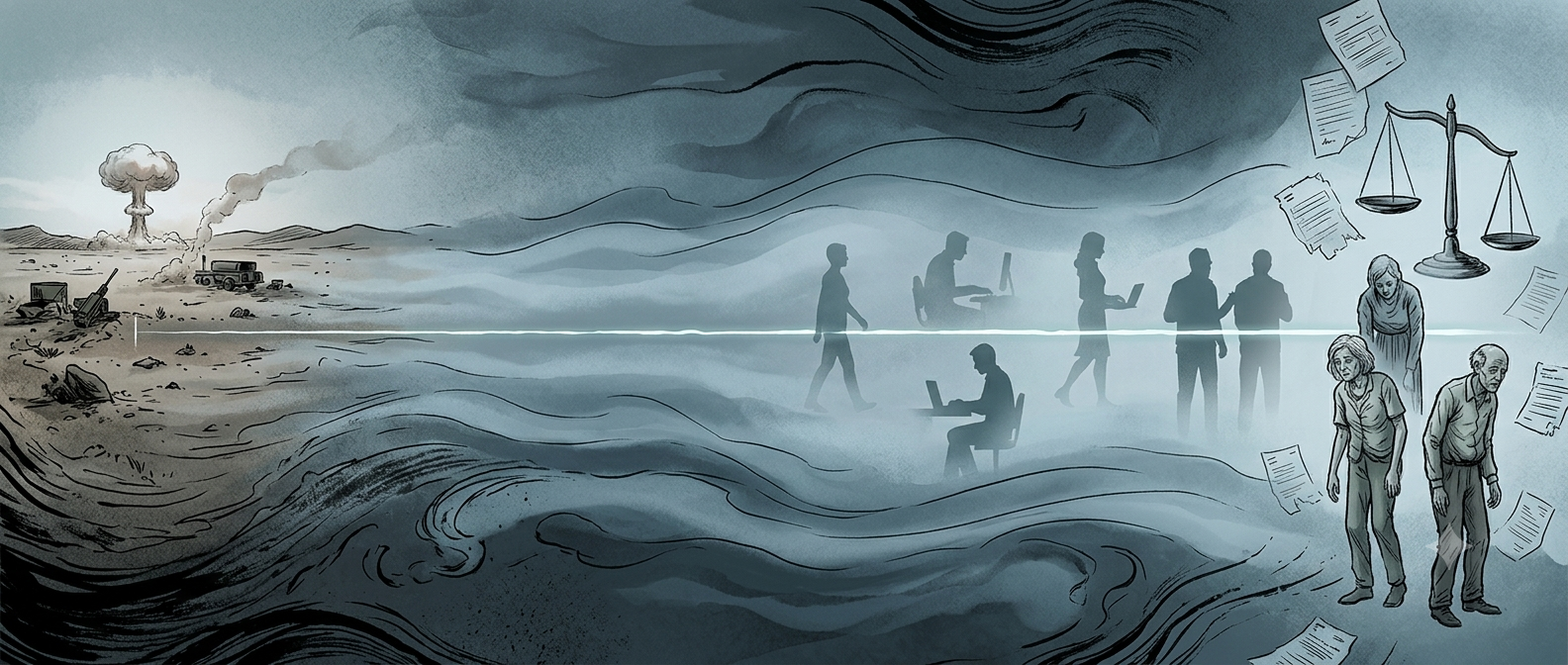
Lire la suite à propos de l’article What Nuclear Testing Changed in the Way We Think About Risk / Part 2 
Image générée par IA

What Nuclear Testing Changed in the Way We Think About Risk / Part 2 

In the first article, we saw why nuclear risk fundamentally escapes the classical logic of liability law: invisible effects, delayed contamination, an individualised causal link that science cannot establish with certainty, and a state that was itself the source of the risk. Faced with this structural deadlock, the legislature had…

0 commentaire
Lire la suite à propos de l’article What Nuclear Testing Changed in the Way We Think About Risk
Image générée par IA

What Nuclear Testing Changed in the Way We Think About Risk

Feyzin, Seveso, Bhopal, AZF, every technological disaster has left a lasting mark on our law. But all of them shared one common feature: the damage was visible, dated, locatable. Victims could be identified, the danger zone could be defined, a responsible party could be named. Nuclear testing changed everything. Invisible…

0 commentaire

Biodiversité, une protection équilibrée

Face à une atteinte à la biodiversité, l'opinion publique réclame souvent l'arrêt immédiat de l'activité en cause. Cette réaction, aussi compréhensible soit-elle, ne reflète pas la réalité du droit de l'environnement. En matière d’installations classées pour la protection de l’environnement, le droit impose un encadrement rigoureux des activités susceptibles d’affecter…

0 commentaire